chatgpt image sep 23 2025 from tanggalin at pagandahin
<linearGradient id="sl-pl-stream-svg-grad01" linear-gradient(90deg, #ff8c59, #ffb37f 24%, #a3bf5f 49%, #7ca63a 75%, #527f32)
0%

AI & Emergent Tech

inflammatory brain cells driving progressive ms discovered

Inflammatory Brain Cells Driving Progressive MS Discovered​

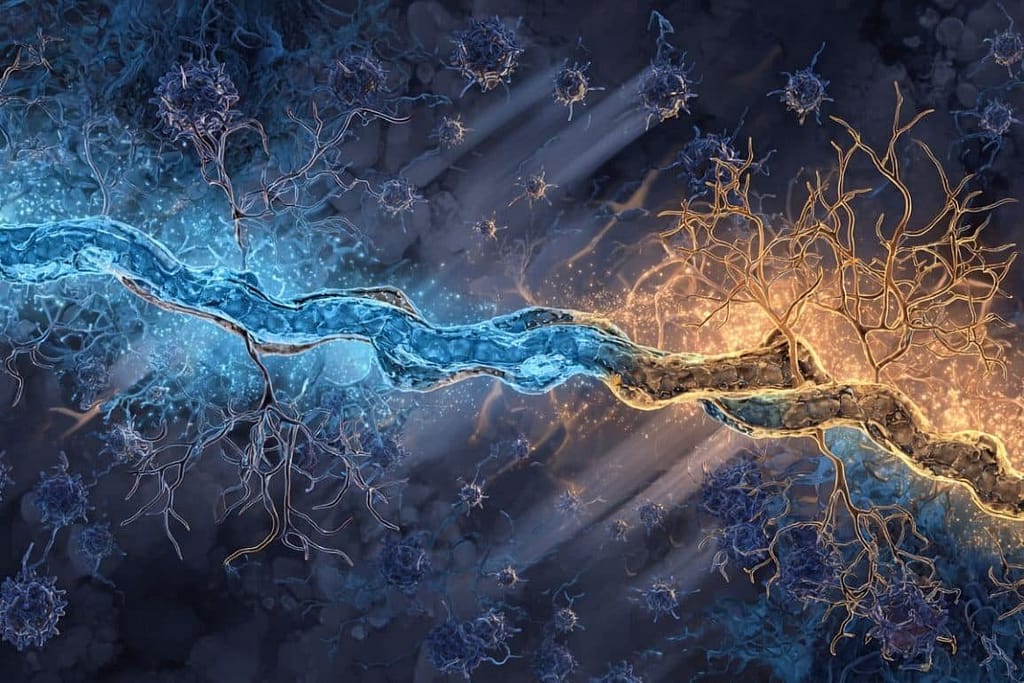
Researchers have identified a rare type of brain cell that may drive the chronic inflammation and neurodegeneration seen in progressive multiple sclerosis (MS). These cells, called disease-associated radial glia-like (DARG) cells, appear six times more often in patients with progressive MS than in healthy individuals.​ 

Inflammatory Brain Cells Driving Progressive MS Discovered​ Read More »

gut microbes may shape brain and behavior through hidden mutations

Gut Microbes May Shape Brain and Behavior Through Hidden Mutations​

In a groundbreaking study using Merino sheep, researchers uncovered that tiny genetic variations within gut microbes can influence brain-related behavior. By sequencing over 5,000 microbial genomes—including 3,500 never before reported—they linked single nucleotide variations (SNVs) in microbes to neurobehavioral traits and plasma metabolites tied to brain function.​ 

Gut Microbes May Shape Brain and Behavior Through Hidden Mutations​ Read More »

brain cells that thrive on uncertainty help us adapt and learn

Brain Cells That Thrive on Uncertainty Help Us Adapt and Learn​

Scientists have discovered a group of brain cells in the orbitofrontal cortex that become more active when outcomes are uncertain, revealing how the brain adapts and learns from unpredictable situations. These neurons—found in both rats and humans—help balance flexibility and precision in decision-making, particularly when rewards are inconsistent.​ 

Brain Cells That Thrive on Uncertainty Help Us Adapt and Learn​ Read More »

childlike face illusion helps adults recall forgotten memories

Childlike Face Illusion Helps Adults Recall Forgotten Memories​

A groundbreaking study has found that adults can recall more detailed childhood memories after briefly perceiving themselves with a childlike version of their own face. Using a virtual “enfacement illusion,” participants saw a live, altered image of their face resembling how they looked as children, creating a temporary sense of embodying their younger selves.​ 

Childlike Face Illusion Helps Adults Recall Forgotten Memories​ Read More »

gene behind child brain disorder also tied to parkinson’s disease

Gene Behind Child Brain Disorder Also Tied to Parkinson’s Disease​

Scientists have discovered that mutations in the EPG5 gene—known for causing the rare childhood disorder Vici syndrome—also increase the risk of Parkinson’s disease and dementia later in life. The gene plays a crucial role in autophagy, the process by which cells clear out damaged material.​ 

Gene Behind Child Brain Disorder Also Tied to Parkinson’s Disease​ Read More »

lifelong social bonds keep the aging brain sharp and flexible

Lifelong Social Bonds Keep the Aging Brain Sharp and Flexible​

Rats that lived in social groups throughout their lives retained youthful memory and mental flexibility well into old age, according to new research. Even with equal physical stimulation, only socially connected rats performed as well as younger ones on complex memory tests, while isolated rats showed significant decline.​ 

Lifelong Social Bonds Keep the Aging Brain Sharp and Flexible​ Read More »

compound could repair nerve damage in multiple sclerosis

Compound Could Repair Nerve Damage in Multiple Sclerosis​

Researchers have identified two compounds capable of repairing the protective myelin sheath damaged by multiple sclerosis, a major advance toward reversing nerve injury rather than just slowing it. The lead compound, K102, not only promotes remyelination but also balances immune function—key for long-term neurological recovery.​ 

Compound Could Repair Nerve Damage in Multiple Sclerosis​ Read More »

hunger, fear, and the brain’s hidden switch to turn off chronic pain

Hunger, Fear, and the Brain’s Hidden Switch to Turn Off Chronic Pain​

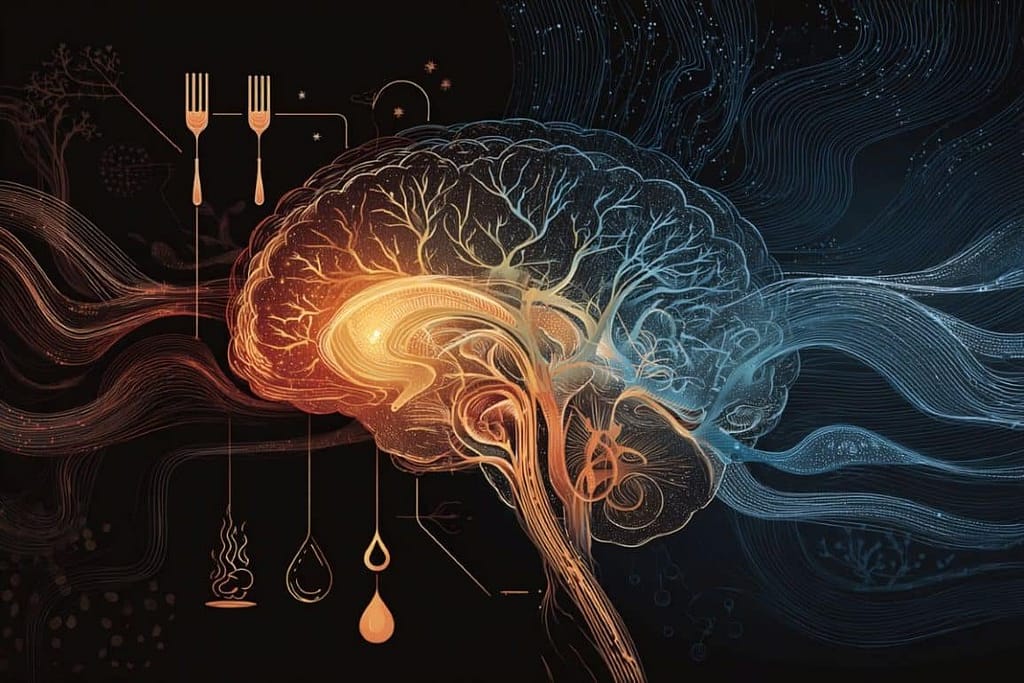
Chronic pain affects nearly 50 million Americans, yet new research reveals the brain may have an internal switch that can turn it down. Scientists identified a group of neurons in the brainstem that regulate long-term pain by integrating signals related to hunger, fear, and thirst.​ 

Hunger, Fear, and the Brain’s Hidden Switch to Turn Off Chronic Pain​ Read More »

social inference could be the key to healing schizophrenia

Social Inference Could Be the Key to Healing Schizophrenia​

Researchers have identified a brain function that could transform how schizophrenia is treated—by focusing on social inference, the ability to interpret social cues and intentions. The study found that strengthening this skill early can help young patients regain independence and prevent long-term cognitive decline.​ 

Social Inference Could Be the Key to Healing Schizophrenia​ Read More »

human brain on a chip reveals how inflammation breaks the mind

Human Brain-on-a-Chip Reveals How Inflammation Breaks the Mind​

Researchers have developed brain-on-a-chip technology that uses human tissue to model how the brain’s protective barrier breaks down during inflammation and disease. The system replicates the blood-brain barrier, showing how cytokine storms and leaked blood proteins can trigger harmful changes in brain cells.​ 

Human Brain-on-a-Chip Reveals How Inflammation Breaks the Mind​ Read More »

Scroll to Top