chatgpt image sep 23 2025 from tanggalin at pagandahin
<linearGradient id="sl-pl-stream-svg-grad01" linear-gradient(90deg, #ff8c59, #ffb37f 24%, #a3bf5f 49%, #7ca63a 75%, #527f32)
0%

AI & Emergent Tech

the brain has a dance mode, and ai just mapped it

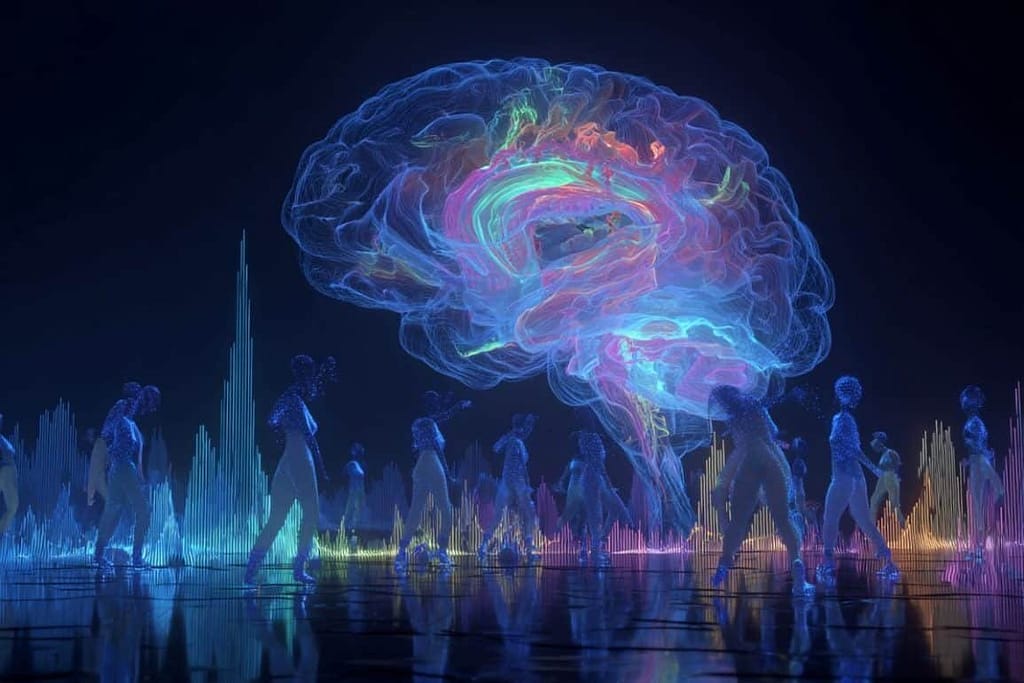
The Brain Has a Dance Mode, And AI Just Mapped It​

A team of researchers used a massive dance video dataset and advanced AI models to map how the human brain interprets dance, revealing striking differences between experts and nonexperts. By pairing fMRI recordings with AI-derived cross-modal features, they found that higher-order brain regions outperform simple motion or sound cues when processing choreography.​ 

The Brain Has a Dance Mode, And AI Just Mapped It​ Read More »

shocking disparities: women face higher risk of ect

Shocking Disparities: Women Face Higher Risk of ECT​

A large international survey of 858 electroconvulsive therapy recipients found that women are twice as likely as men to receive ECT and experience more adverse effects. Women reported higher rates of memory loss, greater feelings of coercion, and more harmful emotional outcomes, often describing the treatment as retraumatizing.​ 

Shocking Disparities: Women Face Higher Risk of ECT​ Read More »

ultra thin finger patch recreates touch with human level precision

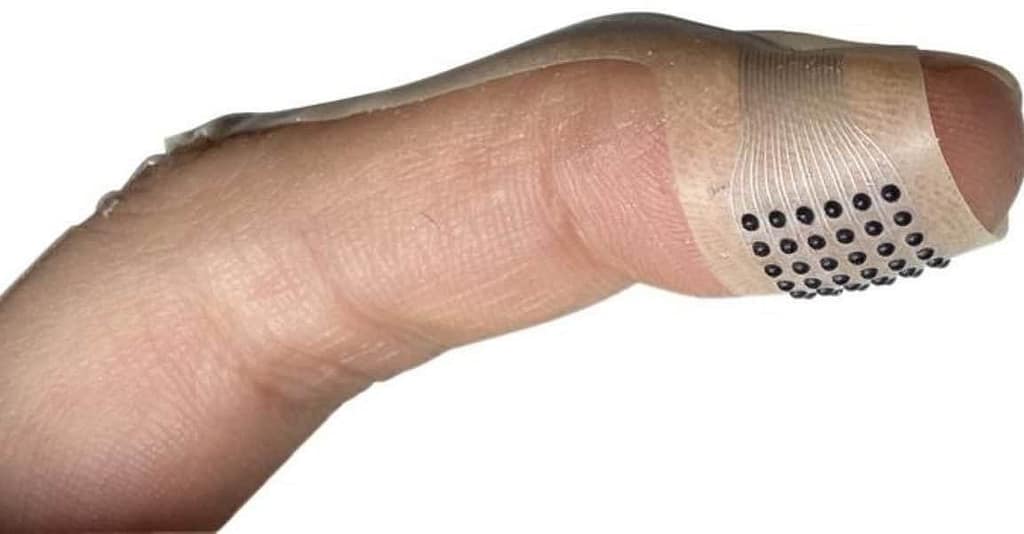
Ultra-Thin Finger Patch Recreates Touch With Human-Level Precision​

Engineers have created VoxeLite, the first wearable haptic device capable of matching the sensitivity of the human fingertip. Built as a paper-thin, flexible bandage for the finger, it uses high-density electroadhesive “pixels of touch” to recreate fine textures and directional cues with lifelike accuracy.​ 

Ultra-Thin Finger Patch Recreates Touch With Human-Level Precision​ Read More »

restoring vision: temporary retinal silencing reverses amblyopia

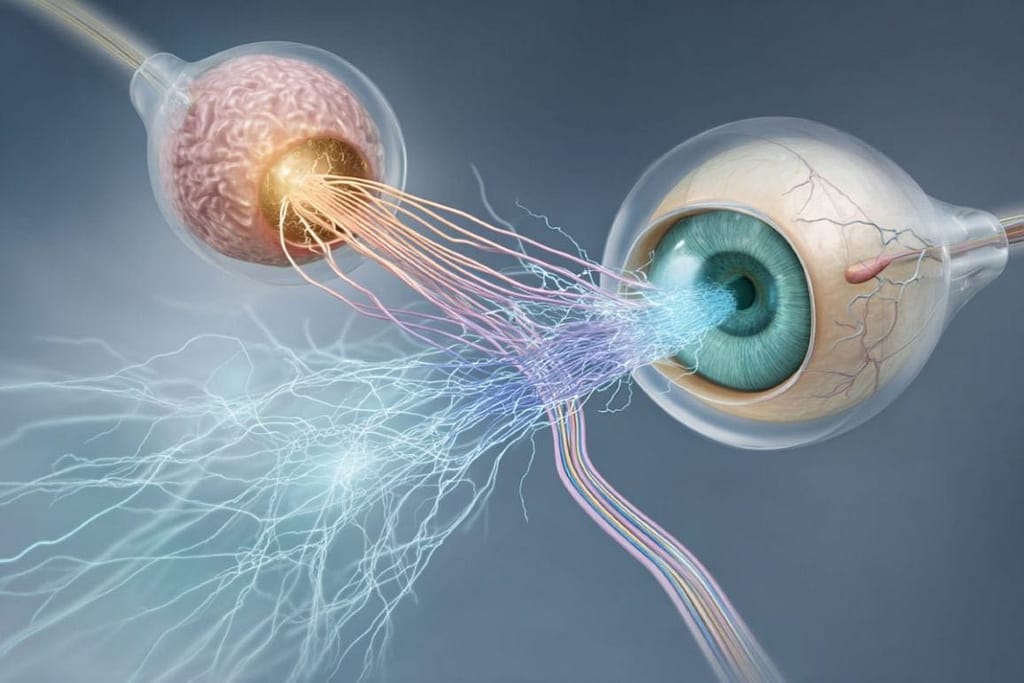
Restoring Vision: Temporary Retinal Silencing Reverses Amblyopia​

A new study in mice shows that briefly anesthetizing the retina of the weaker eye can restore its neural influence in the adult visual cortex. The treatment activates a specific burst-firing mode in thalamic neurons, a developmental mechanism that reopens plasticity even after the usual critical period has closed.​ 

Restoring Vision: Temporary Retinal Silencing Reverses Amblyopia​ Read More »

lithium fails to slow cognitive decline in alzheimer’s

Lithium Fails to Slow Cognitive Decline in Alzheimer’s​

A new meta-analysis of six randomized controlled trials shows that lithium supplementation does not significantly slow cognitive decline in people with mild cognitive impairment or Alzheimer’s disease. While preclinical evidence suggests lithium supports resilience against amyloid and tau pathology, these benefits failed to translate to clinical outcomes using traditional lithium salts.​ 

Lithium Fails to Slow Cognitive Decline in Alzheimer’s​ Read More »

eyes blink in time with music, revealing hidden brain rhythms

Eyes Blink in Time With Music, Revealing Hidden Brain Rhythms​

New research shows that spontaneous eye blinks naturally sync to the beat of music, revealing a hidden form of auditory-motor synchronization that occurs even without conscious movement. In more than 100 participants listening to steady-tempo classical music, both blinks and brainwaves aligned with the rhythm, even when songs were played backward or replaced with tone-based

Eyes Blink in Time With Music, Revealing Hidden Brain Rhythms​ Read More »

night vision disorders share a surprising cellular trigger

Night-Vision Disorders Share a Surprising Cellular Trigger​

New research reveals that the loss of a single ion channel, TRPM1, is enough to produce persistent rhythmic oscillations in the retina, a feature observed in both congenital stationary night blindness and retinitis pigmentosa. By comparing Trpm1 and mGluR6 knockout mice, researchers identified a disrupted circuit between rod bipolar cells and AII amacrine cells that

Night-Vision Disorders Share a Surprising Cellular Trigger​ Read More »

deep brain stimulation promising for severe, resistant depression

Deep Brain Stimulation Promising for Severe, Resistant Depression​

A new clinical trial shows that deep brain stimulation (DBS) improved symptoms in half of adults with treatment-resistant depression, with one-third reaching remission. Researchers found that theta-frequency brain activity in the bed nucleus of the stria terminalis (BNST) predicted how well each patient responded.​ 

Deep Brain Stimulation Promising for Severe, Resistant Depression​ Read More »

rare adhd gene variants linked to 15 fold higher risk

Rare ADHD Gene Variants Linked to 15-Fold Higher Risk​

A massive international genetic study has uncovered rare, high-effect variants in three specific genes—MAP1A, ANO8 and ANK2—that dramatically increase the likelihood of developing ADHD. These variants, though extremely uncommon, strongly affect genes expressed in dopaminergic and GABAergic neurons, influencing brain development from fetal life onward.​ 

Rare ADHD Gene Variants Linked to 15-Fold Higher Risk​ Read More »

Scroll to Top