chatgpt image sep 23 2025 from tanggalin at pagandahin
<linearGradient id="sl-pl-stream-svg-grad01" linear-gradient(90deg, #ff8c59, #ffb37f 24%, #a3bf5f 49%, #7ca63a 75%, #527f32)
0%

AI & Emergent Tech

babies’ brains tune in to mom’s voice and shift how they see new faces

Babies’ Brains Tune In to Mom’s Voice and Shift How They See New Faces​

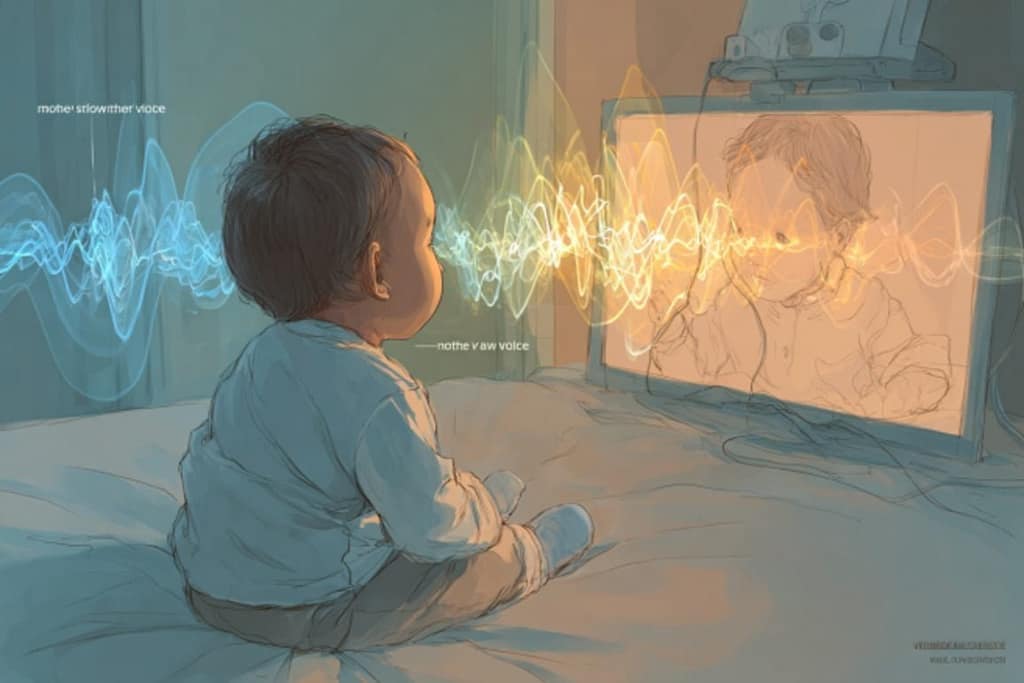
New findings show that seven-month-old infants are finely tuned to their mothers’ voices, displaying stronger neural tracking than when hearing strangers. When a stranger’s voice accompanied an unfamiliar face, babies’ brains showed enhanced processing of that face, suggesting maternal speech shifts how infants allocate attention.​ 

Babies’ Brains Tune In to Mom’s Voice and Shift How They See New Faces​ Read More »

psychedelics calm stress circuits to reduce alcohol drinking

Psychedelics Calm Stress Circuits to Reduce Alcohol Drinking​

New research shows that psilocin, the active metabolite of the psychedelic psilocybin, may reduce alcohol consumption by calming stress-sensitive neurons in the central amygdala. In female mice exposed to long-term alcohol use, psilocin dampened the hyperactivity of these neurons, temporarily reducing drinking.​ 

Psychedelics Calm Stress Circuits to Reduce Alcohol Drinking​ Read More »

why alzheimer’s patients forget loved ones

Why Alzheimer’s Patients Forget Loved Ones​

Researchers have discovered that the heartbreaking moment when a person with Alzheimer’s no longer recognizes family may stem from the breakdown of perineuronal nets, protective structures that support social memory. In mice, the loss of these nets erased memory of familiar individuals while sparing object memory, mirroring early human symptoms.​ 

Why Alzheimer’s Patients Forget Loved Ones​ Read More »

shyness may originate in the cerebellum

Shyness May Originate in the Cerebellum​

New research reveals that trait shyness is linked to reduced spontaneous neural activity in the cerebellum, a brain region traditionally associated with motor control but increasingly recognized for its role in emotion and social cognition. Using resting-state fMRI and ReHo analysis, researchers found that shy individuals exhibited lower synchrony in the cerebellar Crus I region.​ 

Shyness May Originate in the Cerebellum​ Read More »

brain decoder translates visual thoughts into text

Brain Decoder Translates Visual Thoughts Into Text​

A new brain decoding method called mind captioning can generate accurate text descriptions of what a person is seeing or recalling—without relying on the brain’s language system. Instead, it uses semantic features from vision-related brain activity and deep learning models to translate nonverbal thoughts into structured sentences.​ 

Brain Decoder Translates Visual Thoughts Into Text​ Read More »

touching without contact: we physically sense objects before feeling them

Touching Without Contact: We Physically Sense Objects Before Feeling Them​

A new study shows that humans possess a form of “remote touch,” allowing them to detect hidden objects in sand before making direct contact. Participants sensed buried cubes by perceiving tiny mechanical reflections generated as they moved their fingertips through the sand.​ 

Touching Without Contact: We Physically Sense Objects Before Feeling Them​ Read More »

adaptive music tech makes workouts more fun, helps people stay active

Adaptive Music Tech Makes Workouts More Fun, Helps People Stay Active​

Researchers have shown that adaptive music systems that adjust tempo and rhythm to match a user’s movement can make exercise significantly more enjoyable and motivating. These personalized interactive music systems use real-time data from wearables to keep music aligned with walking, cycling, or weightlifting intensity, helping users stay in rhythm and maintain effort.​ 

Adaptive Music Tech Makes Workouts More Fun, Helps People Stay Active​ Read More »

Scroll to Top